


How to Choose a Wire and Cable Extrusion Line: A Buyer's Guide
 Oct 09, 2026|
 View:10
Choosing the right wire and cable extrusion line is essential for cable manufacturers looking to improve production efficiency, maintain consistent insulation quality, and meet changing market demands. The best configuration depends on the cable type, conductor specifications, insulation or sheathing material, required output, and factory conditions.
Before purchasing a cable extrusion line, buyers should evaluate the extruder, crosshead, cooling system, haul-off unit, take-up equipment, and automation options as an integrated production system. Comparing these factors helps manufacturers select suitable equipment, manage operating costs, and reduce unnecessary configuration changes.
This guide explains how to choose a wire and cable extrusion line, compare key technical specifications, evaluate manufacturers, and prepare the information needed for an accurate quotation.
What Is a Wire and Cable Extrusion Line?
A wire and cable extrusion line is a production system used to apply insulation or an outer sheath to a conductor. It processes a compatible polymer material through an extruder and crosshead to form a continuous layer around the wire or cable.
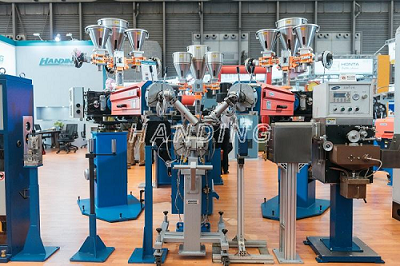
A typical wire and cable extrusion line includes the following components:
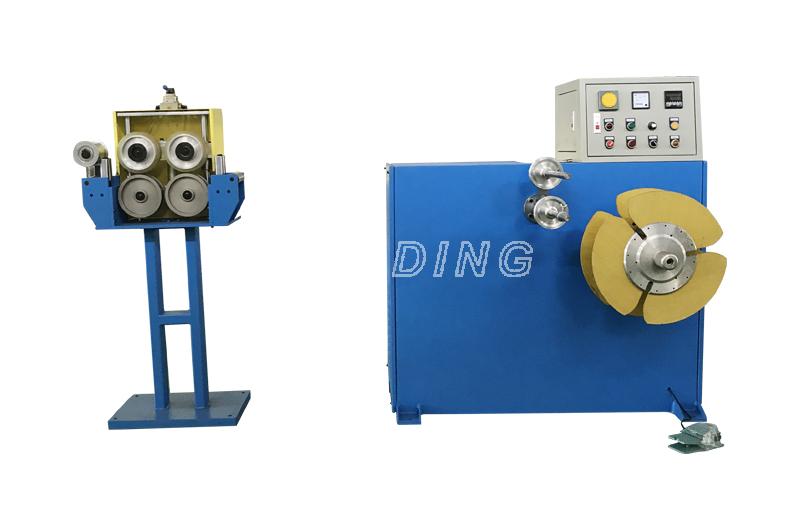
Pay-off unit: Supplies the conductor or cable core to the production line.
Extruder: Melts and conveys the selected material under controlled processing conditions.
Crosshead and tooling: Directs the extrusion material around the conductor to form the insulation or sheath.
Cooling system: Cools the extruded layer to help maintain the required shape and dimensions.
Haul-off unit: Pulls the cable through the production process at a controlled speed.
Take-up unit: Collects the finished cable onto a reel or drum.
Depending on the application, additional equipment may include online diameter measurement systems, spark testers, process monitoring devices, and automated tension controls.
What Cable Products Can an Extrusion Line Manufacture?
Depending on the machine configuration and material compatibility, a cable extrusion line may be used to manufacture building wires, power cables, control cables, automotive wires, communication cables, and other insulated or sheathed products.
However, not every extrusion line can process every cable type. Buyers should confirm the supported conductor dimensions, polymer materials, finished cable diameter, layer structure, and required production speed before selecting equipment.
7 Factors to Consider When Choosing a Cable Extrusion Line
Selecting a suitable cable extrusion line requires more than comparing the extruder size or maximum line speed. The entire production process must match the intended cable products and operating conditions.
1. Identify Your Cable Type and Finished Product Specifications
Start by defining the cables you plan to manufacture. Different cable structures require different extrusion configurations, tooling, and downstream equipment. A line designed for small-diameter insulated wires may have different requirements from one used for larger power cable insulation or outer sheathing.
Before contacting a wire and cable machinery manufacturer, prepare the following information:
Cable type and intended application
Conductor material and cross-sectional area
Number of conductors or cable cores, where applicable
Target insulation or sheath material
Finished cable diameter and dimensional tolerances
Single-layer or multilayer extrusion requirements
Required quality inspection and testing procedures
These specifications help the supplier determine whether a standard extrusion line is suitable or whether a customized configuration is needed.
2. Choose the Right Insulation and Sheathing Materials
Material compatibility is a critical factor when selecting a wire and cable extrusion machine. Different polymers have different processing characteristics, temperature requirements, and equipment configuration needs.
Common cable insulation and sheathing materials include PVC, PE, XLPE, and other application-specific compounds. Their suitability depends on the cable design and the intended electrical, mechanical, thermal, and environmental performance.
When discussing materials with a supplier, confirm:
The exact material grade and processing requirements
Suitable screw and barrel configurations
Required extrusion temperature control
Crosshead and tooling compatibility
Cooling requirements and production conditions
Any special processing or quality requirements
For example, processing requirements for a PVC-insulated building wire may differ from those for a cable using another polymer compound. XLPE cable production may also involve specific process requirements, depending on whether the insulation is produced through conventional extrusion followed by a separate crosslinking process or an integrated specialized line.
Do not assume that one extruder configuration can handle every material without modification. Ask the supplier to verify compatibility against the actual material datasheet and cable specifications.
3. Match Production Output and Line Speed to Your Requirements
Production output is an important consideration when choosing a cable extrusion line, but the highest advertised line speed does not necessarily mean the highest usable output.
Actual production performance depends on several variables, including:
Cable diameter and conductor size
Material processing characteristics
Extrusion stability and output capacity
Cooling time and cooling system design
Haul-off performance
Take-up capacity and winding requirements
Product quality and dimensional tolerances
A line may operate at a higher speed for one product than for another. Therefore, buyers should request performance information based on the intended cable specifications rather than relying only on maximum rated speed.
When comparing cable extrusion line manufacturers, ask for expected output under defined operating conditions. Clarify the material, finished cable dimensions, line speed, quality criteria, and test conditions used to support the stated performance.
4. Evaluate Extruder Size and Screw Configuration
The extruder is one of the most important components of a wire and cable extrusion line. Its configuration affects material processing, output capacity, and the consistency of the extrusion process.
Important parameters include screw diameter, length-to-diameter ratio (L/D), drive power, temperature control, and the compatibility of the screw and barrel with the selected material.
However, extruder size should not be selected in isolation. A larger screw diameter or higher motor power does not automatically guarantee better product quality or greater overall line efficiency.
Ask the supplier to explain how the proposed extruder configuration matches your material type, required output, conductor size, finished cable diameter, product tolerances, and expected production schedule.
For projects involving several cable types, clarify which products the proposed configuration can process and what tooling or setup changes may be required between production runs.
5. Check the Crosshead, Cooling System, and Dimensional Control
The crosshead, extrusion tooling, and cooling system work together to form and stabilize the insulation or sheath around the conductor.
Crosshead and tooling: Confirm compatibility with the conductor dimensions, material, insulation thickness, cable structure, and required product range. Ask whether tooling changes are needed for different products.
Cooling system: Check whether the cooling arrangement can support the required line speed and finished cable dimensions. Cooling capacity and layout should be evaluated against the actual material and process conditions.
Dimensional measurement: Determine whether online diameter measurement, eccentricity monitoring, or other inspection systems are required for your quality standards.
Quality control: Clarify the applicable inspection methods, measurement tolerances, and acceptance criteria before ordering the equipment.
These details are particularly important for manufacturers that need consistent product dimensions across long production runs or multiple cable specifications.
6. Consider Automation and Auxiliary Equipment
The main extruder is only one part of a complete cable extrusion line. Auxiliary equipment and control systems also influence production coordination, material handling, and operator workload.
Depending on the application, buyers may need:
Pay-off and take-up systems
Haul-off units
Tension control
Online diameter measurement
Spark testing or other applicable inspection equipment
Centralized production controls
Data monitoring and production records
Additional material feeding or handling systems
Automation requirements should be determined by production volume, product specifications, labor arrangements, quality standards, and the level of integration required by the factory.
For manufacturers upgrading an existing line, confirm mechanical interfaces, electrical requirements, control communication, available floor space, and the operating characteristics of existing machinery.
7. Check Factory Space, Utilities, and Future Expansion
Before purchasing a wire and cable extrusion line, confirm that your factory can accommodate the proposed equipment and its operating requirements.
Available installation space and production layout
Electrical supply and connected power requirements
Cooling water and other utility requirements
Compressed air requirements, if applicable
Material storage and handling arrangements
Operator access and maintenance clearance
Finished cable storage and reel handling
Equipment transportation and installation conditions
Also consider whether your factory plans to introduce additional cable products or increase production capacity in the future. Discuss possible expansion options with the supplier before finalizing the equipment layout.
Need Help Selecting a Cable Extrusion Line?
Share your cable type, material, target output, and finished dimensions with Handing Machinery to discuss a suitable equipment configuration.
Get a Customized SolutionHow to Match Extrusion Line Specifications to Your Production Needs
The most effective way to select a suitable cable extrusion line is to provide the manufacturer with a clear technical specification sheet. Use the following checklist when preparing a request for quotation.
| Parameter | Information to Prepare |
|---|---|
| Cable type | Building wire, power cable, control cable, automotive wire, or another product |
| Conductor specifications | Material, cross-sectional area, and conductor structure |
| Insulation or sheath material | PVC, PE, XLPE, or another specified compound |
| Finished cable diameter | Target dimensions and acceptable tolerances |
| Production output | Required capacity under defined operating conditions |
| Line speed | Target production speed for the specified cable |
| Quality requirements | Dimensional accuracy and applicable testing |
| Automation | Required measurement, control, and handling functions |
| Factory conditions | Available space, electrical supply, and cooling utilities |
| Project requirements | Installation, commissioning, training, and spare parts |
This information helps the supplier assess the required configuration and identify technical limitations before preparing a quotation. If your factory manufactures several cable types, provide specifications for each product rather than relying on a single representative cable.
Request a Cable Extrusion Line Quotation
Prepare your cable specifications, material requirements, target output, and factory conditions for a more accurate equipment recommendation.
Request a QuoteStandard vs. Customized Cable Extrusion Lines
Choosing between a standard and customized cable extrusion line depends on the complexity of your production requirements.
A standard configuration may be suitable when the intended cable products, materials, and operating conditions fall within an established equipment range. It can simplify equipment selection when the required production process is relatively straightforward.
A customized cable extrusion line may be more appropriate when the project involves special cable dimensions, multiple production requirements, additional automation, non-standard auxiliary equipment, or integration with existing manufacturing systems.
Before deciding, compare the proposed configurations in terms of supported cable specifications, extruder and crosshead configuration, cooling and take-up equipment, tooling requirements, quality inspection systems, factory layout, installation support, and future production flexibility.
Customization should address clearly defined production needs rather than simply adding more equipment. Ask the supplier to explain which options are essential, which are optional, and how each option affects the total project cost.
How to Evaluate a Wire and Cable Extrusion Line Manufacturer
Review Relevant Manufacturing Experience
Check whether the supplier offers equipment suitable for your intended cable products and manufacturing process. Relevant product experience is more useful than general claims about manufacturing capability. Review the manufacturer's product catalog, machine specifications, workshop information, and available application references.
Verify Technical Documentation and Quality Control
Request technical specifications, equipment configuration lists, and relevant inspection documentation. Depending on the project, you may also need information about electrical components, safety provisions, testing procedures, and equipment acceptance criteria.
Confirm Installation, Commissioning, and After-Sales Support
Before placing an order, clarify whether the supplier provides installation guidance, commissioning support, operator training, spare parts, and remote technical assistance. Confirm the warranty scope, response arrangements, documentation language, and any service conditions that may affect your production schedule.
Compare Quotations Beyond the Initial Price
Two cable extrusion line quotations may cover different equipment configurations. Compare the complete scope rather than looking only at the total purchase price. Review the included auxiliary equipment, tooling, control systems, testing devices, installation support, spare parts, and acceptance requirements.
Looking for a Reliable Cable Machinery Supplier?
Discuss your production process, equipment configuration, installation requirements, and after-sales support needs with Handing Machinery.
Contact Our TeamWhat Affects the Price of a Cable Extrusion Line?
The price of a wire and cable extrusion line depends on the required production configuration, technical specifications, and project scope. There is no single price that applies to every cable manufacturing application.
1. Extruder specifications: Screw configuration, drive system, output requirements, and material compatibility influence equipment selection.
2. Crosshead and tooling: Tooling requirements vary according to cable dimensions, insulation structure, and the intended product range.
3. Auxiliary equipment: Cooling systems, haul-off units, take-up equipment, and material handling systems affect the total configuration.
4. Automation and quality inspection: Online measurement, process monitoring, and additional inspection functions may increase the project scope.
5. Customization and integration: Special layouts, multiple product specifications, and integration with existing equipment may require additional engineering.
6. Installation and after-sales support: Commissioning, training, spare parts, and service arrangements should be considered when comparing supplier quotations.
To obtain a meaningful quotation, provide the cable specifications, required output, material information, factory conditions, and desired equipment configuration. This allows the supplier to evaluate the project rather than quote an unsuitable standard setup.
Frequently Asked Questions About Wire and Cable Extrusion Lines
1. What is a wire and cable extrusion line used for?
A wire and cable extrusion line applies insulation or a sheath around a conductor using a compatible extrusion material. Depending on the configuration, it can support different cable manufacturing applications, provided the equipment, tooling, and material processing requirements are suitable.
2. How do I choose the right extruder size for my cable products?
Consider the material, conductor size, finished cable diameter, required output, and processing conditions. Screw diameter and drive power are only part of the selection process. Ask the supplier to verify the proposed extruder configuration against your actual product specifications and production targets.
3. What materials can a cable extrusion line process?
Depending on the machine configuration, cable extrusion equipment may process materials such as PVC, PE, and other suitable polymer compounds. Compatibility depends on the material grade, processing requirements, screw and barrel configuration, crosshead, and temperature control system. Confirm material suitability with the manufacturer before purchasing.
4. What determines the production speed of a cable extrusion line?
Production speed depends on cable dimensions, material processing characteristics, extrusion output, cooling capacity, haul-off performance, take-up system, and required product quality. Usable production speed should be evaluated under actual operating conditions rather than based only on the maximum rated line speed.
5. How much does a wire and cable extrusion line cost?
The price varies according to the extruder configuration, cable specifications, tooling, auxiliary equipment, automation, and project scope. For an accurate quotation, provide your intended cable products, material, target output, finished dimensions, and customization requirements.
6. What information should I provide when requesting a quotation?
Prepare your cable type, conductor material and dimensions, insulation or sheath material, finished cable diameter, required output, factory utilities, automation preferences, and project timeline. If you manufacture multiple cable types, provide specifications for each product so the supplier can evaluate the most suitable configuration.
Request a Wire and Cable Extrusion Line Quotation from Handing Machinery
Selecting the right wire and cable extrusion line starts with a clear understanding of your products, production targets, material requirements, and factory conditions.
Jiangsu Handing Cable Machinery Co., Ltd. offers a range of wire and cable manufacturing equipment. By sharing your technical specifications and project requirements, you can discuss suitable equipment options and identify the configuration that best fits your production process.
When contacting Handing Machinery, prepare the following information:
Cable type and intended application
Conductor and insulation or sheath materials
Finished cable dimensions
Required production output
Automation and auxiliary equipment requirements
Installation location and project schedule
Providing these details helps the team review your requirements and discuss an appropriate equipment configuration and quotation.
Need a Wire and Cable Extrusion Line for Your Project?
Send us your cable specifications, material, target output, and project requirements to discuss a suitable production line configuration and quotation.
Request a Quote Today