


What Is an Active Back Twist Machine and Why Is It Important for High-Quality Cable Manufacturing?
 Jul 29, 2026|
 View:218
In modern cable manufacturing, maintaining stable cable quality and reducing production defects have become critical challenges for manufacturers. During the cabling process, wire cores may generate internal stress, twisting deformation, and bending rebound, which can affect cable roundness, flexibility, and long-term performance.
An active back twist machine is an advanced cable manufacturing equipment designed to solve these problems by applying synchronized reverse twisting force during the cable payoff process. It helps release internal stress in wire cores, compensate twisting torque, stabilize cable forming, and improve overall cable quality.
For manufacturers producing EV cables, control cables, servo cables, and flexible drag chain cables, active back twist equipment has become an important solution for upgrading high-performance cable production lines.
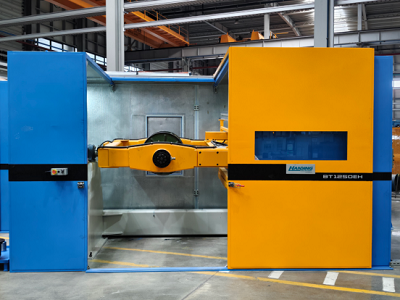
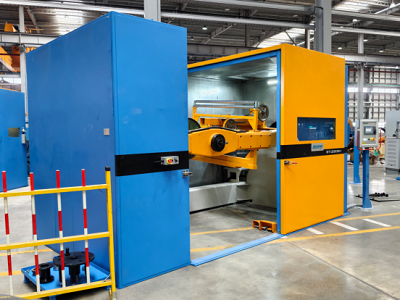
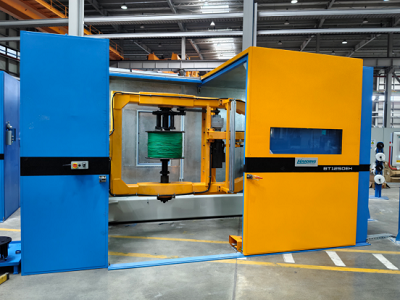
Handing’s BT-1250EH.F Active Back Twist Equipment is developed for high-end cabling applications. It integrates servo synchronous control, constant tension payoff technology, and intelligent safety systems to help cable manufacturers achieve more stable and reliable production performance.
Key Takeaways
An active back twist machine helps release internal stress generated during cable production.
It reduces cable twisting defects, bending rebound, and core displacement.
Servo synchronous control improves production stability and process accuracy.
The equipment is suitable for new energy cables, control cables, and flexible drag chain cables.
Choosing the right cable twisting equipment supplier is essential for production efficiency and long-term reliability.
What Problems Do Cable Manufacturers Face During Cabling Production?
Cable production involves multiple processes, including wire drawing, insulation, twisting, stranding, and final forming. During the cabling process, wire cores naturally accumulate internal stress because of mechanical tension and twisting forces.
Without effective stress control, manufacturers may encounter several problems.
1. Cable Twisting and Rebound Issues
After twisting, cable cores may attempt to return to their original position because of accumulated internal stress. This can cause:
Cable twisting deformation
Bending rebound
Poor cable flexibility
Unstable final shape
For industries such as robotics, electric vehicles, and industrial automation, these defects can significantly affect cable performance.
2. Uneven Tension During Payoff
Traditional payoff systems mainly provide passive wire feeding. However, they cannot actively compensate for twisting forces generated during cabling.
Unstable tension may result in:
Wire core scratches
Uneven cable forming
Reduced production consistency
Active back twist equipment solves this issue by providing controlled and synchronized payoff tension.
3. Higher Production Costs Caused by Defective Cables
When cable quality is unstable, manufacturers may face:
Increased material waste
More rejected products
Lower production efficiency
Additional quality inspection costs
Therefore, improving cable forming stability has become a key requirement for modern cable factories.
How Does an Active Back Twist Machine Work?
An active back twist machine works by introducing controlled reverse twisting movement during the cable payoff process. Instead of allowing wire cores to naturally absorb twisting stress, the equipment actively compensates for these forces.
The working process includes three major steps.
Step 1: Constant Tension Active Payoff
The equipment uses an active payoff mechanism to maintain stable wire tension during operation.
This helps:
Protect wire core surfaces
Improve cable forming consistency
Reduce tension fluctuations
Handing BT-1250EH.F is equipped with a constant tension active payoff mechanism designed for stable high-quality cabling production.
Step 2: Servo Synchronous Control
The servo control system synchronizes the active back twist unit with the main cabling machine.
Key advantages include:
Real-time speed matching
Precise twist compensation
Stable high-speed operation
The BT-1250EH.F adopts a servo synchronous control system and supports S/Z twist direction switching with stepless adjustable twist back ratio.
Step 3: Active Twist Compensation
During cable stranding, the equipment generates reverse twisting force to compensate for torque created during production.
This process helps:
Release internal wire stress
Reduce cable deformation
Improve cable roundness
What Are the Benefits of Active Back Twist Equipment?
1. Reduce Cable Twisting Defects
One of the biggest advantages of active back twist equipment is improving cable forming quality.
It helps reduce common production problems including:
Cable twisting
Cable bulging
Bending rebound
Core displacement
By controlling twisting stress in advance, manufacturers can produce cables with better appearance and more stable mechanical performance.
2. Improve Cable Roundness and Stability
Cable roundness is an important quality indicator, especially for:
EV charging cables
Servo cables
Robotics cables
Flexible industrial cables
Active back twist technology helps maintain consistent cable geometry during production.
3. Improve Production Efficiency
Modern cable manufacturers need equipment that supports flexible production and quick specification changes.
Handing BT-1250EH.F provides:
Main machine linkage control
Process parameter storage
Parameter recall function
Convenient specification changeover
These features help reduce adjustment time and improve production efficiency.
4. Enhance Equipment Safety and Reliability
Industrial cable machinery requires stable operation and comprehensive protection.
The equipment includes:
Wire break protection
Door interlock protection
Overload protection
These safety functions help improve operation reliability and reduce unexpected downtime.
Technical Features of Handing BT-1250EH.F Active Back Twist Equipment
| Feature | Description |
|---|---|
| Reel Capacity | Supports 1250-size reels |
| Compatible Machine | STE single twisters |
| Control System | Servo synchronous control |
| Twist Direction | S/Z twist direction switching |
| Twist Ratio Adjustment | Stepless adjustment |
| Payoff System | Constant tension active payoff |
| Safety Functions | Wire break, door interlock, overload protection |
| Operation | HMI control and parameter management |
Which Industries Need an Active Back Twist Machine?
1. EV Cable Manufacturers
The rapid development of electric vehicles has increased demand for cables with:
High flexibility
Stable bending performance
Long service life
Active back twist equipment helps EV cable manufacturers improve production consistency.
2. Flexible Drag Chain Cable Manufacturers
Drag chain cables are widely used in:
Industrial robots
CNC machines
Automated production lines
These cables require excellent resistance against repeated bending and twisting.
3. Control Cable and Servo Cable Producers
Automation equipment requires cables with stable signal transmission and mechanical durability.
Active back twist technology helps improve cable forming quality for these applications.
4. Cable Production Line Integrators
For companies providing complete cable production solutions, active back twist equipment can be integrated into existing cabling lines to upgrade production capability.
How to Choose the Right Active Back Twist Equipment Supplier?
When purchasing cable manufacturing equipment, buyers should evaluate several factors.
1. Technical Experience
A professional supplier should understand:
Cable manufacturing processes
Cabling challenges
Production line requirements
2. Equipment Compatibility
Before purchasing, manufacturers should confirm:
Compatibility with existing machines
Reel size requirements
Installation conditions
Control system integration
3. Commissioning and After-Sales Support
Industrial equipment requires reliable technical support.
Important services include:
Installation guidance
Production testing
Operation training
Maintenance support
Why Choose Handing Active Back Twist Equipment?
Handing focuses on providing complete cabling production solutions for wire and cable manufacturers.
The BT-1250EH.F Active Back Twist Equipment has completed assembly, no-load testing, and loaded process commissioning. All performance indicators meet design specifications, providing reliable support for high-end cable production applications.
With advanced servo control technology, stable mechanical structure, and intelligent operation functions, Handing helps cable manufacturers improve product quality and expand into high-performance cable markets.
The equipment is suitable for:
New energy cables
Control cables
Flexible drag chain cables
Other special cable production applications
Frequently Asked Questions About Active Back Twist Machines
1. What is an active back twist machine?
An active back twist machine is cable manufacturing equipment that applies controlled reverse twisting force during payoff to release internal wire stress and improve cable forming quality.
2. Why do cable manufacturers need active back twist equipment?
Cable manufacturers use active back twist equipment to reduce twisting defects, improve cable roundness, stabilize production quality, and lower rejection rates.
3. What cables can be produced with active back twist equipment?
Active back twist equipment is commonly used for new energy cables, control cables, servo cables, flexible drag chain cables, and other special cables.
4. What is the advantage of servo control in cable twisting equipment?
Servo synchronous control provides accurate speed matching, stable operation, and flexible adjustment of twist compensation parameters.
5. How should buyers select a cable twisting equipment supplier?
Buyers should consider supplier experience, machine compatibility, commissioning capability, technical support, and after-sales service.
Conclusion
As cable applications become more demanding, traditional payoff systems are often unable to meet the requirements of high-performance cable manufacturing. An active back twist machine provides an effective solution by controlling internal stress, compensating twisting forces, and improving cable production stability.
For manufacturers producing EV cables, control cables, and flexible industrial cables, investing in reliable active back twist equipment can help improve product quality, reduce production defects, and strengthen market competitiveness.
Handing’s BT-1250EH.F Active Back Twist Equipment provides an advanced solution for modern cable manufacturing lines and supports manufacturers in achieving stable, high-quality cable production.
Recent News
1.Sailing Overseas with Premium Quality! Batch Shipment of 1000 Back Twist Machine Empowers Global Cable Intelligent Manufacturing
2026-07-202.STE-800AR.SV Cantilever Single Twist Cabling Machine: Intelligent Solution for High-Speed Special Cable Manufacturing
2026-07-243.How Does the STE-1250C Frame Type Single Twisting Machine Improve Cable Manufacturing Efficiency?
2026-07-204.Handing Small-Section Coiling Machine Shipment: Empowering Refined Mass Production with Quantified Parameters
2026-07-065.Heavy Delivery of STE-1600B Single-Twist Cabling Machine! Integrated Stranding & Taping Empowers Full-Category Cable Intelligent Manufacturing
2026-06-306.Intelligent Manufacturing Goes Global | DTE-800C High-Speed Bunching Machine Shipped Smoothly to Empower High-End Cable Manufacturing Worldwide
2026-06-307.High-Speed Double Twist Bunching Machine for Efficient Cable Manufacturing
2026-06-30