


 Oct 27, 2026
 View:8
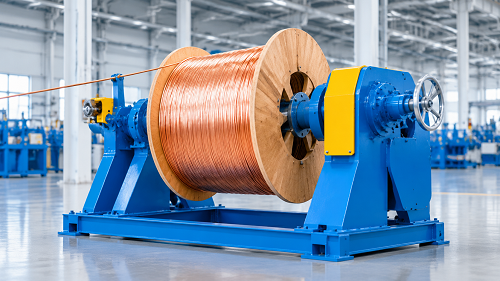
In copper wire drawing production, a pay-off stand is an important auxiliary device that supplies wire rod or copper wire to the drawing machine at a controlled and consistent rate. The right pay-off stand for a copper wire drawing machine helps reduce wire tangling, maintain stable feeding, minimize unnecessary downtime, and improve overall production efficiency.
Different wire drawing applications require different pay-off configurations. Factors such as copper wire diameter, coil weight, bobbin size, line speed, required tension, and loading method all influence the selection. Common options include gantry type pay-off stands, magnetic powder tension pay-off stands, active pay-off stands, motorized double-head pay-off stands, and static bobbin pay-off stands.
This guide explains the main types of pay-off stands, their working principles, suitable applications, and the key factors to consider when selecting equipment for copper wire drawing and related wire and cable production lines.
1. Why Is a Pay-off Stand Important in Copper Wire Drawing?
During copper wire drawing, copper rod or wire passes through drawing dies to achieve the required diameter. The pay-off system supplies the incoming material to the drawing machine while helping maintain stable wire movement.
An unsuitable pay-off device can cause excessive tension, slack wire, tangling, uneven feeding, or frequent line stoppages. These problems may affect wire quality and reduce equipment utilization.
A suitable pay-off stand should help manufacturers achieve the following objectives:
Stable wire feeding: Supply copper wire smoothly according to the requirements of the production line.
Appropriate tension control: Reduce tension fluctuations that may affect drawing stability or wire handling.
Efficient material loading: Match the coil weight, bobbin dimensions, and loading method used in the factory.
Reduced downtime: Minimize wire tangling, feeding interruptions, and unnecessary manual intervention.
Production line compatibility: Work with the drawing machine and any downstream bunching, stranding, or other wire-processing equipment.
The best configuration depends on the complete production process rather than the pay-off stand alone. Manufacturers should confirm the incoming wire specifications and the drawing machine's operating requirements before selecting a model.
2. What Are the Main Types of Pay-off Stands?
Pay-off stands can be classified according to their mechanical structure, drive system, tension control method, and bobbin-loading configuration. The following five types cover common equipment choices for copper wire drawing and related wire-processing applications.
2.1 Gantry Type Pay-off Stand
A gantry type pay-off stand is designed for applications involving large, heavy wire coils or reels. Its gantry-style structure supports the reel and provides a practical way to release wire into the production line.
Compared with compact pay-off devices used for fine wire, a heavy-duty gantry system is more suitable when the incoming material has a large flange diameter or substantial coil weight. The appropriate configuration depends on the reel dimensions, lifting method, floor layout, and required feeding speed.
Typical applications include:
Heavy copper or aluminum wire and cable processing.
Production lines using large reels or high-capacity wire coils.
Industrial wire feeding operations where robust reel support is required.
When selecting this type, check the maximum reel weight, flange diameter range, loading and unloading arrangement, and compatibility with the downstream machine.
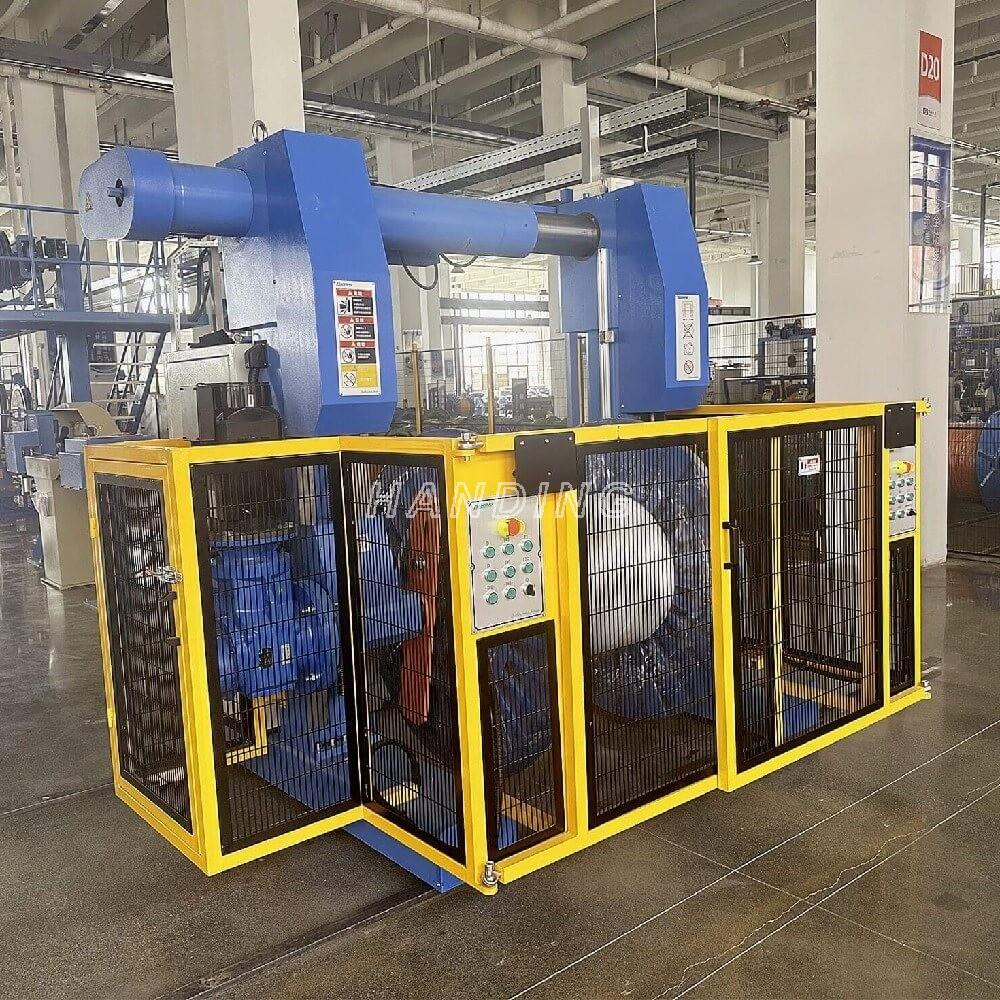
Gantry Type Pay-off
A heavy-duty pay-off solution for releasing wire from large reels. Select the configuration according to reel dimensions, load capacity, and production line requirements.
Key selection factors: Reel flange diameter, maximum reel weight, loading method, and wire feeding requirements.
View Product Details2.2 No-shaft Magnetic Powder Tension Pay-off Stand
A no-shaft magnetic powder tension pay-off stand combines a shaftless loading configuration with magnetic powder tension control. Magnetic powder braking can help regulate the resistance applied to the unwinding reel, making it useful where controlled wire release is important.
A shaftless arrangement may also simplify reel loading and unloading, depending on the equipment design. The required magnetic powder tension unit should be selected according to the reel size, wire characteristics, line speed, and tension range needed by the process.
Typical applications include:
Wire and cable production requiring controlled unwinding tension.
Production processes where consistent wire feeding is important.
Applications using different bobbin sizes that require an appropriately matched tension system.
Before purchasing, confirm the compatible bobbin diameter, tension-control range, adjustment method, and interface with the downstream equipment. Magnetic powder tension settings should be matched to the actual wire and production conditions.
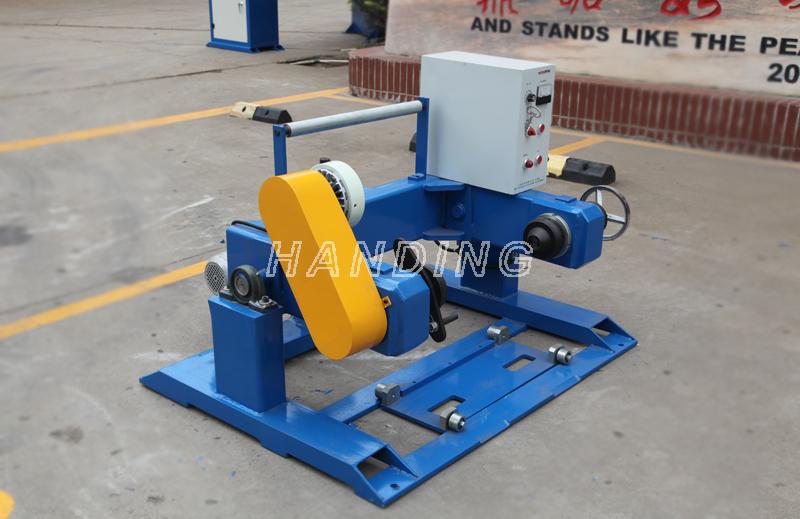
No-shaft Magnetic Powder Tension Pay-off
Designed for wire and cable pay-off applications that require adjustable unwinding resistance and a shaftless bobbin-loading arrangement.
Key selection factors: Bobbin diameter, required tension, wire type, line speed, and loading arrangement.
View Product Details2.3 Active Pay-off Stand
An active pay-off stand uses a powered drive to assist wire release. Instead of relying only on the pulling force of the downstream machine, the pay-off unit actively feeds the wire according to the configured operating conditions.
This arrangement can be beneficial in production lines that require coordinated feeding and higher operating speeds. Depending on the model, drive control and a swing-rod or other wire-position feedback mechanism may help coordinate the pay-off with the downstream process.
Typical applications include:
Wire drawing and wire-processing lines that require powered wire feeding.
Continuous production processes with defined line-speed requirements.
Applications where coordinated feeding can help reduce slack or excessive pulling force.
Buyers should verify the supported wire diameter, maximum pay-off speed, motor power, compatible bobbin sizes, and control interface. Maximum line speed should be evaluated alongside the drawing machine and the material being processed.
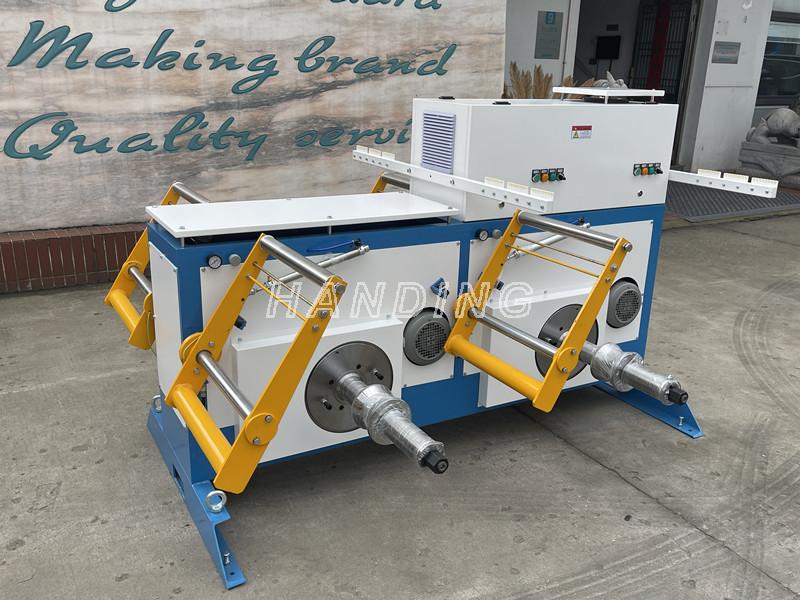
Active Pay-off
A powered wire-feeding solution for production lines that require active pay-off and coordination with downstream processing equipment.
Published specifications: Wire diameter 1–4 mm, maximum pay-off speed 350 m/min, 2.2 kW frequency-conversion motor, and standard bobbin size of 630–800 mm. Confirm the required configuration with the manufacturer.
View Product Details2.4 Double-heads Motorized Pay-off Stand
A double-heads motorized pay-off stand provides two pay-off positions in one unit. Depending on the production setup, this configuration can support more convenient bobbin changeover and help reduce interruptions associated with reel replacement.
Motorized pay-off is particularly relevant where the wire needs to be fed in coordination with downstream equipment. Some configurations include a wire storage holder or swing mechanism and a signal-based speed-control arrangement. The actual functions depend on the selected model.
Typical applications include:
LAN cable production and other suitable wire-processing lines.
Production processes using small or medium-sized bobbins.
Operations where motorized feeding and convenient bobbin changeover are priorities.
When evaluating a double-heads system, check each head's bobbin capacity, supported wire diameter, motor power, lifting arrangement, and whether the control system can communicate with the downstream machine.
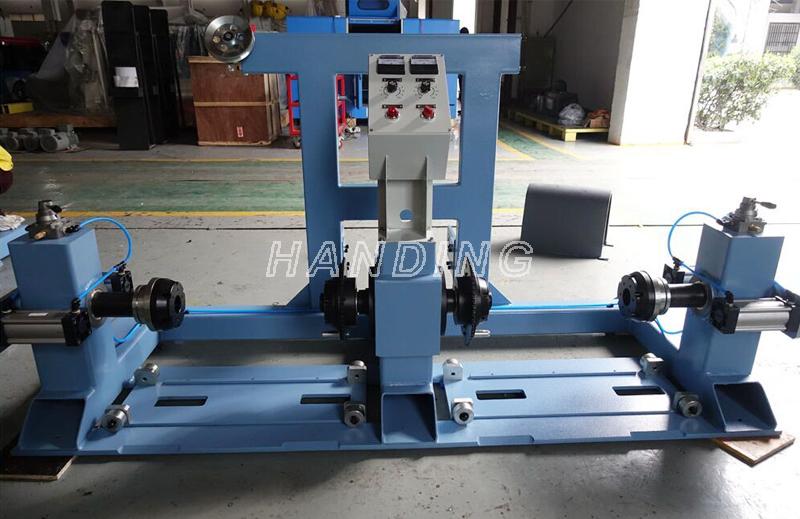
Double-heads Motorized Pay-off
A two-position motorized pay-off solution for suitable wire-processing lines, including LAN cable production. Model selection depends on wire diameter and bobbin requirements.
Available models: HD-400, HD-500, HD-630, and HD-800. Wire diameter and motor power vary by model.
View Product Details2.5 Static Bobbin Pay-off Stand
A static bobbin pay-off stand is a practical option for feeding wire from individual bobbins into suitable wire-processing equipment. Its relatively straightforward arrangement makes it suitable for applications where the bobbin size, wire tension, and feeding requirements fall within the equipment's design range.
Static bobbin pay-off units are commonly used with copper wire bunching machines and other equipment processing fine wire. For these applications, appropriate tension and reliable wire-break detection can be important for maintaining stable production.
Typical applications include:
Fine copper wire processing.
Copper wire bunching and related production operations.
Applications using bobbins within the specified size and weight range.
Before choosing a model, confirm the wire diameter range, bobbin dimensions, required tension, maximum bobbin weight, and available wire-break detection functions.
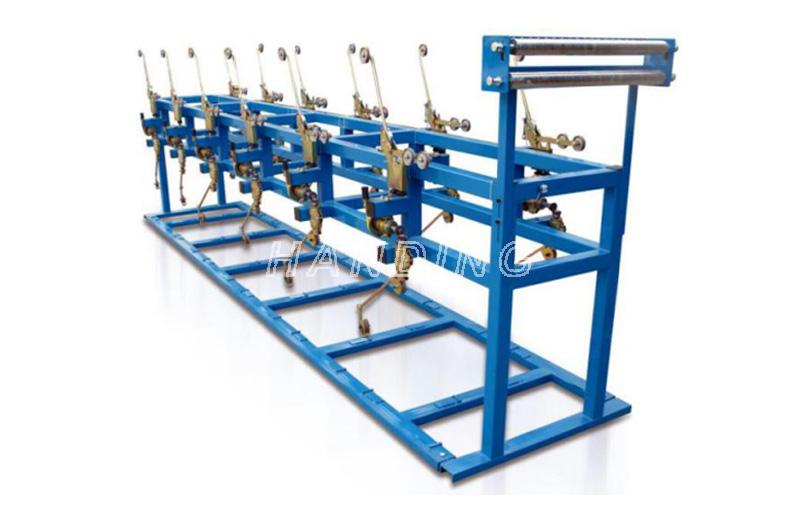
Static Bobbin Pay-off
A bobbin pay-off option for fine-wire processing and copper wire bunching applications, with specifications selected according to wire and bobbin requirements.
Published specifications: Wire diameter 0.08–0.45 mm, bobbin diameter 200–500 mm, tension 50–200 g, and capacity 10–60 kg. Confirm the exact configuration before ordering.
View Product Details3. How to Compare Different Pay-off Stand Types
The following table summarizes the main differences between common pay-off stand configurations. It is intended as an initial selection guide; the final choice should be based on the specific model's technical data and the requirements of the production line.
| Pay-off Stand Type | Main Characteristic | Typical Application | Key Selection Factor |
|---|---|---|---|
| Gantry type pay-off | Heavy-duty reel support | Large reels and heavy wire coils | Reel dimensions and load capacity |
| No-shaft magnetic powder tension pay-off | Magnetic powder tension control and shaftless loading | Wire and cable lines requiring controlled unwinding | Required tension and bobbin size |
| Active pay-off | Powered wire feeding | Production lines requiring coordinated feeding | Line speed, wire diameter, and drive control |
| Double-heads motorized pay-off | Two pay-off positions with motorized operation | Suitable cable and wire processing lines | Bobbin changeover, wire range, and motor power |
| Static bobbin pay-off | Simple bobbin-based wire release | Fine copper wire and bunching applications | Wire diameter, tension, and bobbin capacity |
4. How to Choose a Pay-off Stand for a Copper Wire Drawing Machine
Choosing a pay-off stand involves more than comparing product names or prices. Buyers should provide the equipment supplier with clear technical requirements so the proposed configuration can be matched to the intended production process.
4.1 Confirm the Copper Wire Diameter
The incoming wire diameter affects the required feeding method and tension range. Fine copper wire may require more delicate handling than a thick wire or a heavy rod coil. Confirm both the incoming material diameter and the expected operating range.
4.2 Check Bobbin or Reel Dimensions
Provide the bobbin or reel's flange diameter, barrel diameter, width, and total loaded weight. For large coils, the reel support and loading arrangement are especially important. For smaller bobbins, verify that the mounting system can securely accommodate the specified dimensions.
4.3 Match the Required Line Speed
The pay-off stand must supply wire at a rate compatible with the drawing machine. If the downstream machine operates at high speed, verify the pay-off's rated speed, drive capacity, tension stability, and control response. Do not select equipment based on maximum speed alone without considering wire characteristics and the full line configuration.
4.4 Determine Whether Tension Control Is Required
Some processes can use a relatively simple pay-off arrangement, while others require adjustable braking or active feeding. Magnetic powder tension systems and powered pay-off systems serve different purposes, so the correct option depends on how the downstream machine pulls and processes the wire.
4.5 Evaluate Loading and Changeover Requirements
Consider how often reels need to be replaced, whether operators load bobbins manually, and whether the production line would benefit from a shaftless or double-head configuration. For high-volume operations, easier loading and changeover may improve production continuity.
4.6 Confirm Compatibility with the Complete Production Line
The pay-off stand should be compatible with the drawing machine's inlet position, wire path, control signals, and operating speed. If the line includes bunching, stranding, or other downstream equipment, clarify whether the pay-off unit is intended for the drawing process itself or for a later stage of wire processing.
Need Help Selecting a Pay-off Stand?
Share your copper wire diameter, bobbin dimensions, coil weight, required line speed, and target application with HanDing. The technical team can help you identify a suitable pay-off configuration for your wire and cable production line.
Explore Pay-off EquipmentContact HanDing for a Quote5. Common Problems Caused by an Incorrect Pay-off Selection
Wire Tangling or Irregular Unwinding
Tangling can occur when the reel arrangement, wire path, or feeding speed is unsuitable. Check reel compatibility, wire alignment, and whether the pay-off's operating method matches the downstream machine.
Excessive or Insufficient Wire Tension
Excessive tension may place unnecessary stress on the wire, while insufficient tension can cause slack or unstable feeding. Confirm the required tension range and determine whether a braking or powered feeding system is appropriate.
Frequent Production Stops
Production interruptions may result from difficult bobbin changes, wire-break events, unsuitable reel capacity, or a mismatch between pay-off speed and downstream equipment. Review the complete operating cycle rather than focusing only on the machine's purchase price.
Incompatible Reel or Bobbin Sizes
A reel that exceeds the equipment's specified dimensions or weight can create installation and operating problems. Always provide the actual reel drawing or dimensions when requesting a quotation.
6. Frequently Asked Questions About Pay-off Stands
What is a pay-off stand in wire drawing?
A pay-off stand holds a reel, bobbin, or coil and supplies wire to a downstream machine. Depending on the design, it may provide passive unwinding, braking-based tension control, or powered wire feeding.
Which pay-off stand is suitable for copper wire drawing?
The appropriate type depends on the wire diameter, coil weight, reel dimensions, line speed, tension requirements, and loading method. Gantry type systems are relevant to heavy reels, while active, magnetic powder tension, and static bobbin configurations suit different feeding and tension-control needs.
What is the difference between an active pay-off and a passive pay-off?
An active pay-off uses a powered drive to assist wire feeding. A passive pay-off generally releases wire in response to the pulling force from the downstream equipment, although braking or tension-control mechanisms may be included. The best option depends on the process and the required level of feeding control.
Why is tension control important in copper wire processing?
Stable tension helps maintain consistent wire movement and reduces the risk of slack, tangling, and unnecessary stress on the wire. The required tension depends on the wire diameter, material, line speed, and downstream process.
What information should I provide when requesting a pay-off stand quotation?
Provide the wire material and diameter, reel or bobbin dimensions, loaded weight, required line speed, desired tension-control method, downstream machine model, and any special loading or automation requirements. These details help the supplier recommend a suitable configuration.
7. Find the Right Pay-off Solution for Your Production Line
Selecting the right pay-off stand can improve wire feeding stability, simplify reel handling, and support more consistent production. The main options include gantry type pay-off stands for heavy reels, magnetic powder tension systems for controlled unwinding, active pay-off stands for powered feeding, double-heads motorized units for suitable changeover requirements, and static bobbin pay-off stands for fine-wire applications.
Before making a purchasing decision, compare the actual technical specifications and confirm compatibility with the drawing machine and production process. A suitable configuration should match the wire material, reel capacity, operating speed, tension requirements, and factory layout.
Jiangsu Handing Cable Machinery Co., Ltd. supplies wire and cable production equipment, including pay-off and related auxiliary machinery. Contact the team with your technical requirements to discuss a suitable solution.
Request a Customized Pay-off Solution
Looking for a pay-off stand for copper wire drawing, fine-wire processing, or another wire and cable application? Send HanDing your wire specifications, reel dimensions, production speed, and project requirements to discuss equipment options and obtain a quotation.
Send Your RequirementsEmail: export@handingmachinery.com