


 Oct 26, 2026
 View:5

A tubular strander, also known as a tubular stranding machine, is a wire and cable manufacturing machine designed to twist multiple individual wires into a stranded conductor. It is commonly used for copper and aluminum conductor stranding, with the appropriate machine configuration determined by wire diameter, conductor construction, stranding pitch, and production requirements.
For cable manufacturers, selecting the right tubular strander is essential to achieving the required conductor structure and maintaining a consistent production process. Key factors include the maximum twisting diameter, cage speed, stranding pitch range, bobbin specifications, and compatibility with the intended wire materials.
The JG500/630 Tube Twisting Machine from Jiangsu Handing Cable Machinery Co., Ltd. is designed for copper and aluminum conductor stranding applications. Its published specifications provide a useful reference for manufacturers evaluating tubular stranding equipment for their production lines.
Looking for a Tubular Strander for Your Cable Production Line?
Explore the JG500/630 machine specifications and discuss your conductor requirements with Handing Machinery.
Explore JG500/630 Tubular Strander1. What Is a Tubular Strander?
A tubular strander is a type of cable stranding equipment that uses a rotating tubular or cage assembly to twist multiple wires together into a specified conductor configuration. The individual wires are fed from supply bobbins, brought together through the stranding process, and collected as a stranded conductor.
In cable manufacturing, the stranding process combines individual wires into a conductor with a defined arrangement. The required conductor diameter, number of wires, wire material, and lay length determine whether a particular machine is suitable for the application.
The terms tubular strander, tubular stranding machine, and tube twisting machine are often used in discussions of wire and cable production equipment. However, machine names alone do not establish identical configurations or capabilities. Buyers should compare the actual machine structure and technical specifications before making a purchasing decision.
What Is a Tubular Strander Used For?
A tubular strander is primarily used to strand multiple wires into conductors for subsequent cable manufacturing processes. Depending on the machine configuration and conductor design, applications can include:
Copper conductor stranding for wire and cable production.
Aluminum conductor stranding for suitable cable applications.
Stranding of multiple individual wires into a specified conductor structure.
Production processes that require controlled stranding pitch and conductor diameter.
The actual application range depends on the machine model, tooling, wire specifications, and production process. Manufacturers should confirm that the proposed configuration matches their required conductor design.
2. How Does a Tubular Strander Work?
A tubular stranding machine coordinates wire feeding, rotating stranding components, conductor closing, pulling, and take-up. The exact arrangement varies by machine design, but the production process generally follows several stages.
Step 1: Wire Feeding
Individual wires are supplied from bobbins and guided into the machine. Before production begins, operators confirm the wire material, diameter, bobbin specifications, and required conductor arrangement.
Step 2: Wire Arrangement and Stranding
The wires pass through the machine's stranding section. The rotating assembly and wire path create the required twisting action, bringing the individual wires together into a stranded conductor.
The resulting conductor structure depends on the number and arrangement of wires, the machine configuration, and the selected process settings. These factors must be matched to the intended cable design.
Step 3: Conductor Closing and Forming
The individual wires are brought together at the closing section to form the required conductor profile. Where applicable, suitable tooling and process settings help achieve the specified conductor diameter and shape.
Step 4: Pulling and Take-Up
The stranded conductor is pulled through the downstream section and collected on a take-up bobbin. The pulling system, take-up arrangement, and operating parameters must be compatible with the conductor specifications and production requirements.
How Do Stranding Pitch and Cage Speed Affect Production?
Stranding pitch is the axial distance over which a wire or strand completes one full helical turn around the conductor axis. It is an important process parameter because it determines the geometry of the stranded conductor.
Cage speed describes the rotational speed of the stranding assembly, while capstan speed describes the linear pulling speed of the conductor. These parameters work together with the machine's configuration to determine the resulting stranding pitch and achievable production conditions.
Higher rotational speed does not automatically mean higher usable output. Actual production performance depends on the selected pitch, conductor construction, material properties, operating stability, and other process limitations.
3. What Materials and Cables Can a Tubular Strander Process?
Copper Wire Stranding
Copper is widely used in electrical conductors because of its electrical conductivity and established use in cable manufacturing. A suitable tubular strander can combine individual copper wires into the required conductor configuration, provided that the wire diameter and conductor design fall within the machine's specified operating range.
When selecting a copper wire stranding machine, manufacturers should confirm the single-wire diameter, required conductor diameter, number of wires, stranding pitch, and production target.
Aluminum Wire Stranding
Aluminum conductors are used in various electrical cable applications. A tubular strander configured for aluminum wire can combine individual wires into a specified conductor structure, subject to the machine's design limits and the required production process.
Aluminum wire and copper wire have different material properties. Buyers should therefore verify the recommended operating parameters and tooling for the material being processed rather than assuming that all settings can be transferred directly between materials.
Applications in Cable Manufacturing
Tubular stranding equipment can be used in conductor production for different types of electrical cables, depending on the required conductor structure and machine configuration. Typical evaluation factors include:
Conductor material and individual wire diameter.
Number and arrangement of wires in the conductor.
Required conductor diameter and stranding pitch.
Production speed and downstream processing requirements.
Compatibility with the customer's existing cable manufacturing line.
Not every cable construction is suitable for every tubular strander. Cable manufacturers should provide a conductor drawing or detailed specifications to confirm the machine's suitability before ordering.
4. Key Tubular Strander Specifications Explained
Evaluating a tubular strander requires more than comparing its model name or motor power. The following specifications help buyers determine whether a machine can meet their wire processing requirements.
Single Wire Diameter
The single-wire diameter range defines the individual wire sizes that the machine is designed to process. Buyers should distinguish between the diameter of each input wire and the overall diameter of the finished stranded conductor.
Maximum Twisting Diameter
Maximum twisting diameter indicates an important limit for the conductor or twisting configuration supported by the machine. It should be evaluated together with wire count, conductor arrangement, and any relevant tooling restrictions.
Cage Speed
Cage speed is the rotational speed of the stranding assembly, generally expressed in revolutions per minute (r/min). Its relationship with pulling speed and stranding pitch affects the production process. Buyers should confirm whether the stated value represents the rated or maximum operating speed.
Stranding Pitch Range
Stranding pitch defines the axial length of one complete helical turn. The available pitch range helps determine whether the machine can produce the required conductor geometry. The required pitch should be confirmed against the cable design and the machine's operating limits.
Bobbin Size and Main Motor Power
Bobbin specifications affect wire loading, material handling, and production planning. Main motor power is relevant to machine configuration and drive requirements, but it should not be used as the sole indicator of production speed or output.
Overall machine dimensions and installation conditions are also important. Before ordering, buyers should check the available factory space, equipment layout, electrical supply, material flow, and compatibility with upstream and downstream machinery.
5. JG500 vs. JG630 Tubular Strander: What Are the Differences?
Handing Machinery's JG500 and JG630 Tube Twisting Machines share several published processing specifications, including the listed wire diameter ranges, maximum twisting diameter, cage speed, and stranding pitch range. Their main published differences include cage bobbin size, main motor power, and overall machine dimensions.
| Technical Specification | JG500 | JG630 |
|---|---|---|
| Copper wire diameter | 1.2–5.0 mm | 1.2–5.0 mm |
| Aluminum wire diameter | 1.5–5.0 mm | 1.5–5.0 mm |
| Maximum twisting diameter | 21 mm | 21 mm |
| Cage speed | 500 r/min | 500 r/min |
| Stranding pitch range | 40–448 mm | 40–448 mm |
| Capstan speed | 15–138 m/min | 15–138 m/min |
| Main motor power | 37 kW | 45 kW |
| Cage bobbin | PND500 | PND630 |
| Capstan wheel diameter | 1250 mm | 1250 mm |
| Take-up bobbin | PN1600 | PN1600 |
| Center height | 850 mm | 850 mm |
| Overall dimensions (L × W) | 25 × 2.5 m | 28 × 2.5 m |
Note: Specifications are based on the published JG500/630 product information. Confirm the latest technical datasheet, configuration, and installation dimensions with Handing Machinery before placing an order.
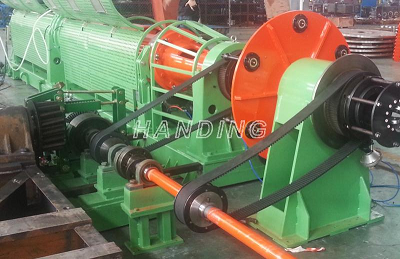
JG500/630 Tube Twisting Machine
A tubular stranding solution for copper and aluminum conductor production. Review the machine specifications to evaluate its suitability for your wire diameter, stranding pitch, and production requirements.
Copper wire diameter: 1.2–5.0 mm
Aluminum wire diameter: 1.5–5.0 mm
Stranding pitch: 40–448 mm
Cage bobbin: PND500 / PND630, depending on model
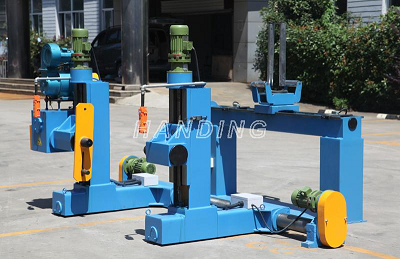
JG500/630 Tubular Stranding Equipment
Explore the JG500/630 machine configuration and technical details for cable conductor stranding. Contact Handing to confirm model compatibility with your conductor construction and factory layout.
Maximum twisting diameter: 21 mm
Cage speed: 500 r/min
Capstan speed: 15–138 m/min
Main motor power: 37 kW / 45 kW, depending on model
Which Model Should You Choose?
The JG500 and JG630 should be evaluated according to the required bobbin configuration, conductor specifications, factory layout, and production process.
Consider the JG500 when its PND500 cage bobbin configuration, listed processing range, and installation dimensions match your production requirements.
Consider the JG630 when its PND630 cage bobbin configuration better matches your wire loading and production planning requirements.
Confirm the complete configuration with the equipment supplier when conductor construction, operating conditions, or downstream equipment may affect machine selection.
The JG630 has a higher listed main motor power and larger overall dimensions, but these differences alone do not establish a higher line speed or greater finished output. Both models have a published cage speed of 500 r/min and a capstan speed range of 15–138 m/min.
Compare JG500 and JG630 for Your Production Needs
Share your wire diameter, conductor construction, required stranding pitch, and production targets to help identify a suitable configuration.
Discuss Your Machine Requirements6. How to Choose the Right Tubular Stranding Machine
Selecting a tubular stranding machine starts with the conductor specifications rather than the machine model alone. The following checklist can help cable manufacturers prepare for technical evaluation and supplier discussions.
1. Define Your Conductor Specifications
Identify the wire material, individual wire diameter, number of wires, finished conductor diameter, and required conductor structure. A technical drawing or sample specification can help the supplier assess whether the machine is suitable.
2. Confirm the Required Stranding Pitch
The required pitch should fall within the machine's available range and be compatible with the intended conductor construction. Buyers should also confirm the relationship between pitch, cage speed, pulling speed, and the expected production conditions.
3. Evaluate Production Requirements
Define the required output and production schedule before comparing equipment. Rated speed, practical operating speed, setup time, material changes, and downstream process limitations may all affect actual output. Ask the supplier to clarify the conditions under which quoted performance figures apply.
4. Check Bobbin Compatibility and Factory Space
Confirm the cage and take-up bobbin specifications, loading requirements, machine footprint, center height, and access space needed for operation and maintenance. The installation plan should also account for material handling and connections to other production equipment.
5. Evaluate Technical Support and After-Sales Service
Before purchasing, clarify the scope of installation and commissioning, operator training, spare parts availability, documentation, warranty terms, and remote or on-site technical support. These details help buyers evaluate the total requirements of integrating new machinery into an existing factory.
Information to Prepare Before Requesting a Quote
Wire material: copper, aluminum, or another specified material.
Individual wire diameter and required conductor diameter.
Number of wires and conductor construction drawing.
Required stranding pitch and target production output.
Preferred bobbin specifications and available installation space.
Power supply requirements and details of existing production equipment.
Destination country, project schedule, and technical support requirements.
7. Why Consider Handing Machinery's JG500/630 Tubular Strander?
Jiangsu Handing Cable Machinery Co., Ltd. specializes in wire and cable manufacturing equipment. Its JG500/630 Tube Twisting Machine provides a defined set of published specifications for manufacturers evaluating equipment for copper and aluminum conductor stranding.
The JG500/630 series offers a published copper wire diameter range of 1.2–5.0 mm, an aluminum wire diameter range of 1.5–5.0 mm, a maximum twisting diameter of 21 mm, and a stranding pitch range of 40–448 mm. These figures provide a starting point for technical discussions about conductor requirements and equipment compatibility.
Rather than selecting equipment based on a product name alone, buyers should submit their conductor drawings, material specifications, and production targets for confirmation. This allows the proposed machine configuration to be assessed against the actual manufacturing process.
To learn more about the equipment, review the product specifications and contact Handing Machinery to discuss your cable production requirements.
Need a Tubular Strander Quote?
Contact Handing Machinery with your conductor specifications, target output, and project requirements to discuss JG500/630 suitability and obtain a quotation.
Get a Tubular Strander Quote8. Frequently Asked Questions About Tubular Stranders
1. What is a tubular strander used for?
A tubular strander is used to twist multiple individual wires into a stranded conductor for cable manufacturing. Depending on the machine configuration, it can process copper or aluminum wires within its specified operating range. The suitable model depends on wire diameter, conductor structure, required pitch, and production requirements.
2. How does a tubular stranding machine work?
A tubular stranding machine feeds individual wires from supply bobbins through a stranding section, where the machine's rotating assembly creates the required twisting action. The wires are brought together into a conductor, then pulled and collected by the downstream take-up system. The exact process depends on the machine's design.
3. What is the difference between a tubular strander and a tube twisting machine?
The terms are often used in related wire and cable manufacturing contexts. However, product names alone do not establish that two machines have the same design or capabilities. Buyers should compare the stranding mechanism, supported conductor structures, wire diameter range, pitch range, and other technical specifications.
4. What wire diameters can the Handing JG500/630 process?
The published specifications list a copper wire diameter range of 1.2–5.0 mm and an aluminum wire diameter range of 1.5–5.0 mm for both the JG500 and JG630 models. Buyers should confirm the latest technical datasheet and the suitability of the complete conductor construction before ordering.
5. What is the maximum cage speed of the JG500/630?
The published cage speed for both the JG500 and JG630 is 500 r/min. Actual operating conditions and production output depend on the conductor structure, required stranding pitch, machine configuration, and process settings. Confirm rated operating conditions with the supplier.
6. What is the stranding pitch range of the JG500/630?
Both models have a published stranding pitch range of 40–448 mm. The required pitch should be selected according to the target conductor construction and verified against the machine's technical specifications and operating conditions.
7. What is the difference between the JG500 and JG630?
The main published differences are cage bobbin size, main motor power, and overall dimensions. The JG500 uses a PND500 cage bobbin and has a listed main motor power of 37 kW, while the JG630 uses a PND630 cage bobbin and has a listed main motor power of 45 kW. Both share the listed cage speed of 500 r/min. Final selection should reflect the actual production requirements.
8. What information is needed to request a tubular strander quotation?
Provide the wire material, individual wire diameter, number of wires, conductor drawing, required stranding pitch, target output, bobbin requirements, and installation conditions. It is also useful to specify the destination country, project timeline, and after-sales support expectations so the supplier can evaluate the equipment requirements more accurately.